
Creating a Capability-Led Organisation: The Future of Professional Services
he future of professional services will be shaped not simply by technical expertise, technology or regulation, but by organisational capability. Firms that deliberately develop the capability of their people, leadership, governance and organisational systems will be better equipped to deliver exceptional client service, respond to change and achieve sustainable long-term success.

Professional Services Are Changing
Professional services have entered a period of unprecedented change. Artificial intelligence is transforming how work is completed. Clients expect greater value, transparency and responsiveness. Regulatory expectations continue to evolve. Competition is increasing. New ways of working are becoming established. Success can no longer depend solely upon the technical expertise of individual professionals. It increasingly depends upon the capability of the organisation as a whole.
Moving Beyond Individual Excellence
For generations, professional firms measured success through the expertise of individual practitioners. While individual competence remains fundamental, organisations now recognise that sustainable success requires much more. High-performing organisations combine:
- professional competence
- effective leadership
- strong governance
- continuous learning
- collaborative cultures
- digital capability
- organisational resilience
- strategic decision-making
Together these create organisational capability that extends far beyond the contribution of any single individual.
Capability Becomes a Strategic Asset
Organisational capability is not an operational function. It is a strategic asset. Like reputation, client trust or intellectual property, capability creates long-term value. It enables organisations to:
- adapt confidently
- innovate effectively
- manage risk intelligently
- develop future leaders
- deliver consistent client outcomes
- respond to emerging challenges
Capability therefore becomes one of the defining characteristics of successful professional organisations.
Leadership Creates Capability
Capability does not develop by accident. It requires leadership commitment. Leaders establish organisational priorities, invest in people, strengthen governance and create cultures where learning and continuous improvement become part of everyday practice. They recognise that capability is built through hundreds of connected decisions rather than isolated initiatives. Every investment in learning. Every supervision conversation. Every governance improvement. Every strategic review. Together these shape the future capability of the organisation.
Integration Creates Strength
Throughout professional services, information often exists in disconnected systems. Learning records. Competence assessments. Governance reports. Operational metrics. Client feedback. Performance information. Viewed independently, each provides valuable insight. When integrated, they create a comprehensive understanding of organisational capability. Leadership gains confidence because decisions are supported by evidence rather than assumption.
Technology Enables Better Decisions
Digital platforms increasingly enable organisations to understand capability in ways that were previously impossible. Integrated systems provide visibility across:
- workforce development
- supervision
- learning
- governance
- organisational risk
- operational performance
- strategic objectives
Technology does not replace professional judgement. Instead, it provides leaders with the information required to exercise that judgement more effectively.
A Culture That Never Stops Learning
The organisations most likely to succeed will be those that never regard capability as complete. They continually ask:
- How can we improve?
- What are we learning?
- Where are our future capability gaps?
- How can we better support our professionals?
- How can we improve client outcomes?
This commitment to continuous improvement creates organisations that become stronger with experience rather than simply older.
Building Organisations Ready for Tomorrow
The future cannot be predicted with certainty. However, organisations can prepare for it. By investing consistently in professional development, organisational learning, governance, leadership and strategic capability, firms become more adaptable regardless of what changes lie ahead. Capability creates confidence because it equips organisations to respond intelligently to uncertainty.
A New Model for Professional Excellence
Professional excellence is no longer defined solely by the knowledge and expertise of individual practitioners. It is increasingly defined by the capability of the organisation that supports them. The highest-performing firms develop systems that enable professionals to succeed consistently. Clients experience this through reliable service, confident advice, effective communication and trusted relationships. Professional excellence therefore becomes an organisational achievement rather than an individual accomplishment.
Looking Ahead
As professional services continue to evolve, organisations that embrace capability-led thinking will be better positioned to thrive. They will invest in people as deliberately as technology. They will strengthen governance alongside innovation. They will view learning as a strategic investment rather than a compliance requirement. Most importantly, they will recognise that long-term success is created by developing the capability of the whole organisation.
Conclusion
The future belongs to organisations that understand capability as a strategic discipline rather than an operational activity. By integrating professional competence, learning, supervision, governance, leadership and organisational insight into a single strategic framework, professional services firms create the resilience, agility and confidence needed to succeed in an increasingly complex world. Capability-led organisations do more than respond to change. They shape it. And in doing so, they create lasting value for their professionals, their clients and the organisations they serve.
CONTINUE READING
Read Other Articles in This Series
Previous Article

Measuring Strategic Capability: Turning Organisational Insight into Executive Decision-Making
Next Article
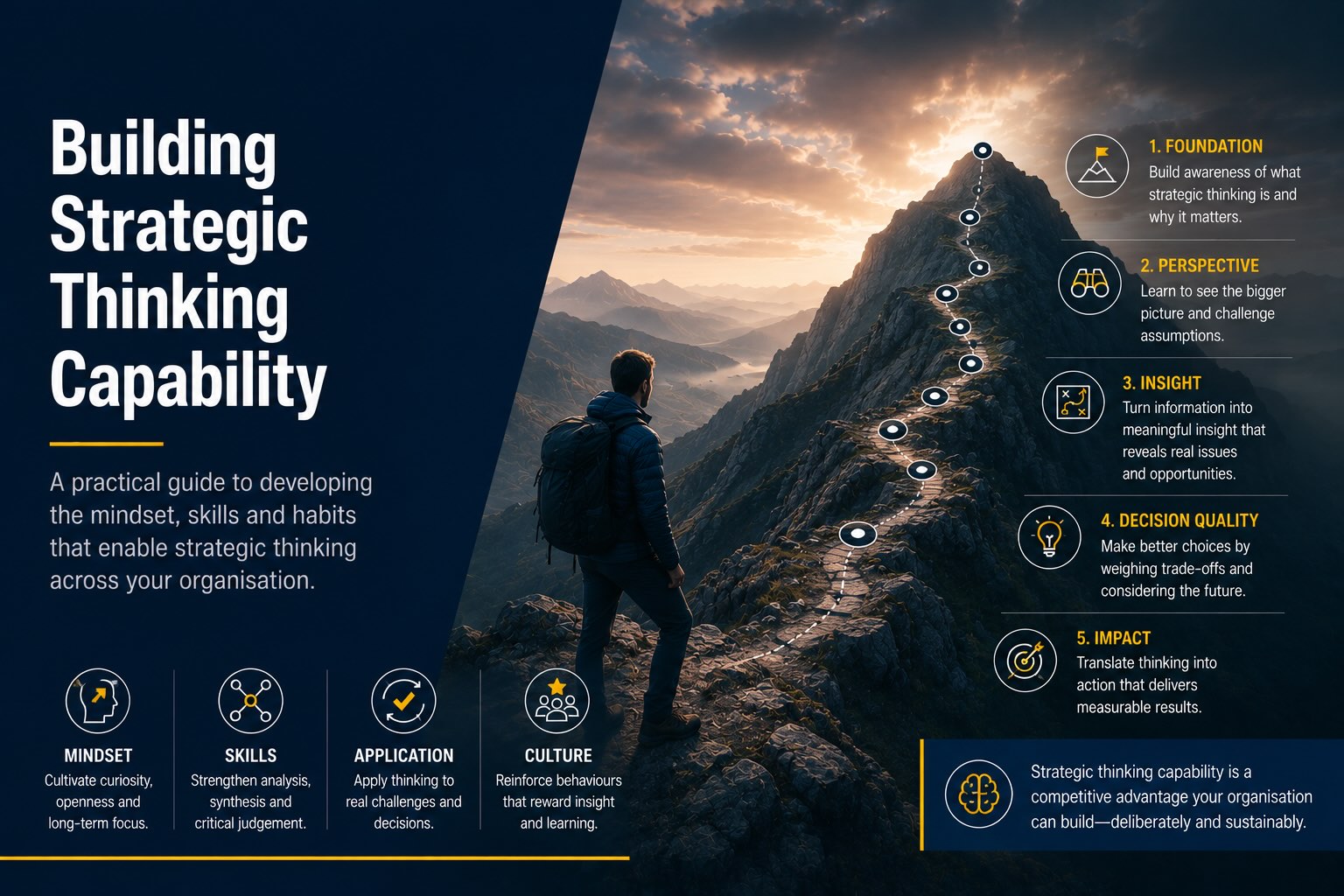
What Strategic Thinking Looks Like in Professional Firms
Explore Related Topics
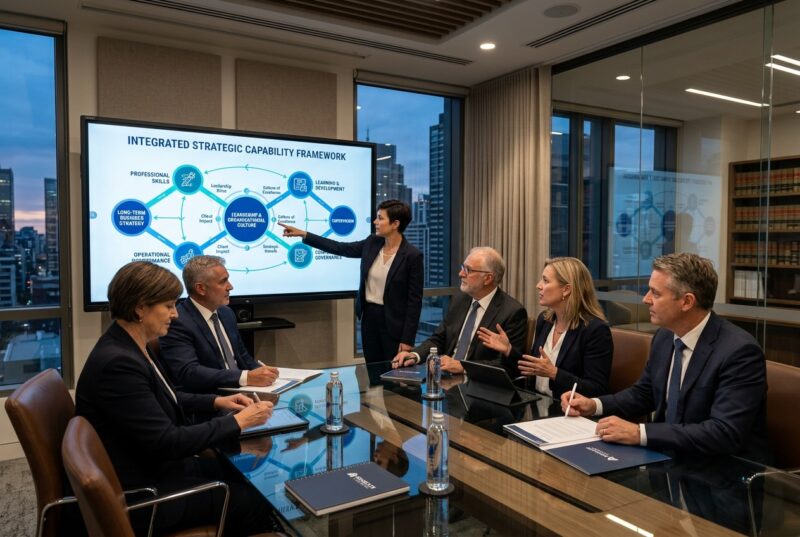
The Strategic Capability Framework for Professional Firms
Recommended Next Step
-
What Strategic Thinking Looks Like in Professional Firms